Bangkok destination guide
Use Bangkok as a landing base before you ask it to be exciting.
Bangkok is often the first place where a Southeast Asia trip becomes real: the airport doors open, the heat arrives, the first money decision appears, and the map suddenly has traffic in it.
My short version: give Bangkok at least two practical nights at the start unless there is a strong reason not to. Use it to sleep, eat, sort the basics and make the next move with a clearer head.
Quick orientation
Make the first Bangkok decisions boring on purpose.
First stay
Two nights is the default. One night often turns Bangkok into airport sleep plus onward stress.
Arrival transfer
Use the airport rail link if your stay is near transit and you still have energy. Use an official taxi or Grab-style ride if you land late, carry too much or need the first move to be simple.
Getting around
Think in BTS/MRT, river boats and short rides, not one heroic cross-city taxi. Traffic can turn a good plan into a waiting room.
First area
Choose by logistics before personality: transit access for onward moves, backpacker services if you need them, or old-city/riverside access if temples are the first real stop.
First full day
Pick one useful task and one pleasant thing: phone data, cash or laundry; then nearby food, a market, a river boat or a short walk.
What Bangkok is for
Bangkok is not only a capital city or a list of sights. For a first Thailand route, it is the easiest place to land, recover, solve small practical tasks and understand how the trip feels before you commit to the north, islands or another country.
That makes it useful even if you do not think of yourself as a city person. You do not have to make Bangkok your favourite stop. You do have to decide whether rushing through it will make the rest of the route harder.
Who it fits
Bangkok fits travellers who want a practical first base: good flight access, food everywhere, transport options, shopping for forgotten things, embassies and onward connections. It also fits people who arrive tired and need the first 24 hours to be simple rather than impressive.
It is especially useful if Thailand is your first Southeast Asia country. A calm Bangkok start gives you a place to learn basic rhythms: heat, traffic, phone data, cash, street food, ride-hailing, jet lag and how long ordinary tasks take when everything is new.
Who should shorten it
Shorten Bangkok if your trip is very short, your flights already make another place the natural first base, or you know the first goal is a specific island or northern plan. Even then, I would be careful with same-day long transfers after an international arrival.
Do not stay longer just because a guide says Bangkok has endless things to do. Stay because the days are helping the route. If the city is only making you hot, tired and impatient, move on cleanly after the basics are sorted.
How many nights I would give it
For most first-time backpackers, I would start with two nights. One night often means landing, sleeping badly, repacking and leaving before you have understood anything. Two nights gives you one full day to eat nearby, walk a little, sort phone/cash/transport and check whether the next move still makes sense.
Three nights can work if Bangkok genuinely interests you or if the arrival was rough. More than that is fine, but it should be a real city stay, not a delayed escape because the onward route was unclear.
The first 24 to 48 hours
Keep the first stretch small. Reach the accommodation without turning the transfer into an adventure. Save the address offline. Make sure check-in still works if the flight is late. Eat somewhere close. Drink water. Sleep.
The next day can be simple: sort local connectivity, check cash and card options, learn one transport route, walk one area, take a river boat or market wander if that fits, and confirm the next major movement after you have rested. Bangkok becomes easier when the first day is allowed to be ordinary.
Choosing the first neighbourhood
I would choose the first neighbourhood by arrival logic before personality. The best first stay is not necessarily the coolest area or the cheapest bed. It is the place that still works when you are tired.
Look for clear check-in, recent reviews, food nearby, a realistic route from the airport, enough quiet to sleep and decent access to the transport you actually need next. If the neighbourhood makes the first evening easier, it has done its job.
Where Bangkok fits in a Thailand route
Bangkok works as:
- a first landing base before Chiang Mai, Krabi, Phuket, the Gulf islands or an overland route;
- a reset point between the north and islands;
- an errands stop for shopping, laundry, admin or onward bookings;
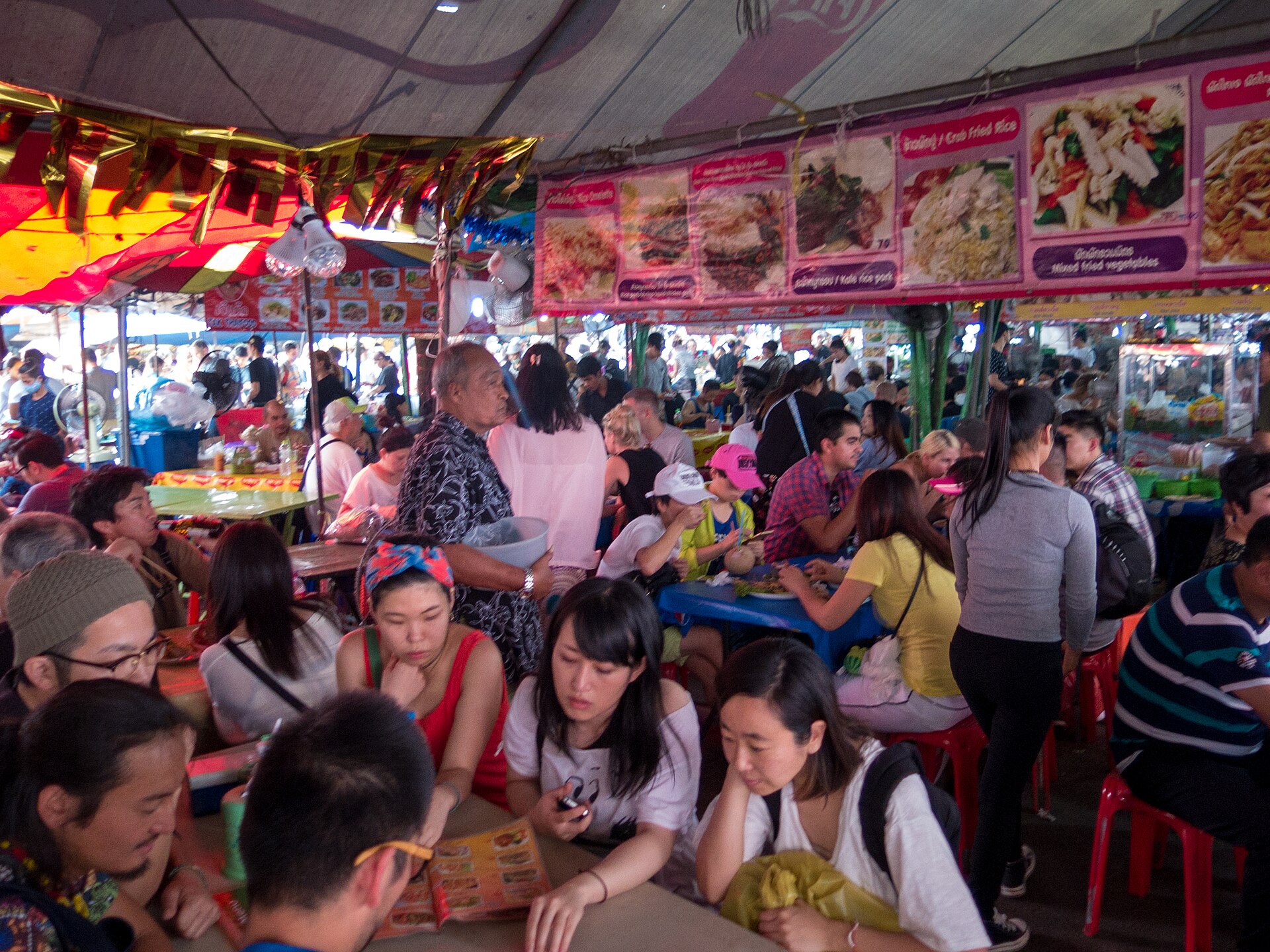
- a food and market city when you have the energy to notice it properly.
What I would avoid is using Bangkok only as a transfer corridor. If you land, cross the city, sleep badly and leave for a train, ferry or domestic flight before you have recovered, the next place inherits the tiredness.
Common mistake
The common mistake is treating Bangkok as a test: arrive, survive one chaotic evening, prove you can move fast, then rush north or south. That can work on paper, but it often makes the first real route decision from a tired state.
A better test is quieter: can you make the first two days easy enough that the rest of Thailand gets a fair start?
What not to overplan
Do not overplan the first Bangkok day with temples, markets, rooftop drinks, long cross-city movement and a night train all stacked together. Pick one useful thing and one pleasant thing. Leave the rest flexible.
Also do not lock every onward transfer before you know how you feel. A train to Chiang Mai, a flight south or an island connection may all be right. They are easier to choose after sleep, food and one calm look at the route.
Links that help
- Thailand backpacking guide for the country-level route frame.
- Where to go in Thailand for how Bangkok compares with Chiang Mai, islands and slower stops.
- Book the first two nights, not the whole trip for the broader arrival principle behind this page.
Source and experience note
This page is practical planning guidance, not a promise that every airport route, neighbourhood detail or transport option is current today. Check current arrival logistics close to departure, especially if you land late, travel in high season or plan an onward connection soon after arrival.