Thailand country hub
Thailand is the easiest place to start, which is exactly why you should not rush it.
Thailand can make a first Southeast Asia trip feel possible. It has easy arrivals, a long backpacker trail, good food, islands, mountains, trains, buses and enough travel infrastructure that you can learn as you go.
My short version: start in Bangkok or Chiang Mai, choose either north plus islands or one deeper region, and do not try to turn Thailand into a highlights race.
If you are not sure which page to open first, use this hub in order: choose the broad route shape, then check the guide that answers the next real decision. Bangkok helps with the first two nights, Chiang Mai and Pai with the northern pace, Krabi/Ao Nang and the islands page with beach decisions, and transport basics with the days that could become too much movement.
Who Thailand is good for
Thailand is a gentle first country if you want Southeast Asia to feel adventurous without making every small task difficult. It suits first-time backpackers, nervous planners, solo travelers, food-focused trips, beach time, easy guesthouses and people who want room to change plans without starting from scratch.
It is not only a beginner country. That is the trap. Because Thailand works so well, people treat it like a transit lounge between islands, temples, night markets and border crossings. The better trip usually comes when you stop using it as practice and let one part of the country take up more space.
First landing points
- Bangkok: the most practical entry for flights, onward transport, embassies, shopping, food and the first two nights. It can feel hot, loud and too easy to escape too quickly.
- Chiang Mai: a softer landing if you want northern Thailand first, with easier streets, cooking classes, day trips and a slower rhythm.
- Phuket or Krabi: useful if the trip is mainly about islands, but less ideal if you still need to learn how the country fits together.
If it is your first time, I would not land and immediately chase a ferry connection the same day. Thailand is forgiving, but tired decisions still make the first day worse than it needs to be.
For a Bangkok arrival, I would make the first stay practical before making it exciting. Choose a place that still works after a delayed flight: clear check-in, recent reviews, food nearby, a realistic route from the airport and enough quiet to sleep properly. The first neighbourhood does not have to be your favourite place in the city. It has to make the first evening easier.
Give Bangkok at least a small landing pad before you send yourself north, south or back to another airport. Sort phone data and cash, eat somewhere close, learn how the traffic and heat feel, then check the next move after sleep. A train to Chiang Mai, an island connection or a domestic flight can all make sense, but they are easier decisions once the trip has stopped being an arrival day.
How long to spend
- 10 to 14 days: choose Bangkok plus the north, or Bangkok plus one island area. Do not do both ends of the country unless you are comfortable with a fast trip.
- 3 weeks: Bangkok, the north and one island coast can work if you leave recovery days between moves.
- 4 weeks or more: Thailand starts to feel less like an itinerary and more like a country. You can slow down, compare regions and stop chasing the next transfer.
Rough route choices
Most first Thailand routes fall into a few shapes:
- Classic first route: Bangkok, Chiang Mai, maybe Pai or another northern stop, then one beach or island area.
- Island focus: Bangkok, Krabi or Phuket, then a small number of Andaman coast islands, or the Gulf islands when the season fits better.
- North focus: Bangkok by train to Chiang Mai, cooking classes, markets, temples, mountain air and slower overland days.
- Overland connector: Thailand as the start or middle of a wider Southeast Asia route, with Laos, Malaysia or Cambodia planned around border and season realities.
The country looks easy to loop, but Thailand is bigger than the first map makes it feel. Every island adds a boat day. Every northern detour adds mountain roads. Every night bus steals a little energy from the next morning.
Once you know the shape, use the supporting pages to remove pressure rather than add stops. The destinations overview compares the main anchors, the islands page helps choose a coast or island area, and the transport page is the reality check when the route only works if every connection is perfect.
Route fatigue check
Before adding another Thailand stop, count the travel days honestly. A night train, a ferry, a minivan, a domestic flight and a cross-city airport transfer are not just lines between better parts of the trip. They are the trip for that day.
If a place only fits because every transfer behaves perfectly, cut something. If an island needs two boats and leaves no slack for weather, make it a later-trip idea. If Chiang Mai is reduced to one packed day before the next vehicle, protect the north or skip it cleanly. Thailand is forgiving, but it is not improved by turning every good place into a deadline.
Islands or north first?
The north and the islands are both good first-trip choices, but they ask for different kinds of energy. Northern Thailand is better for markets, food, cooking classes, temples, guesthouse routines and days that do not revolve around the sea. The islands are better for swimming, diving, beach recovery and doing less on purpose.
If your whole trip is short, choose by season and mood, not by what everyone else says is essential. A Thailand trip without islands can still be a real Thailand trip. A Thailand trip without Chiang Mai can also be fine. What makes the trip weaker is crossing the country twice because you could not bear to leave something out.
Budget notes
Thailand is still workable for backpackers, but it is not one cheap price everywhere. Bangkok street food, local transport and simple rooms can be good value. Islands, diving, beach taxis, ferries, national park fees, alcohol and last-minute high-season rooms can change the budget quickly.
The cheapest Thailand trip is not always the best one. Saving money by moving constantly can cost more in buses, ferries and tired choices. I would rather pay for one extra night in the right place than squeeze in another stop because it looked close on a map.
Transport basics
Thailand is one of the easier countries in the region for moving around. Trains are useful between Bangkok and the north. Buses and minivans cover many routes. Domestic flights can save time when you are crossing long distances. Ferries make the islands possible, but they also make island-hopping slower than people expect.
For short city rides, use official taxis, metered taxis where possible, reputable ride-hailing apps where available and normal caution around tuk-tuk offers that sound too cheap or too convenient. For scooters, be honest with yourself. If you would not ride at home, a Thai island with sand, hills and holiday traffic is not the place to pretend you are suddenly skilled.
Food, cooking classes and ordinary routines
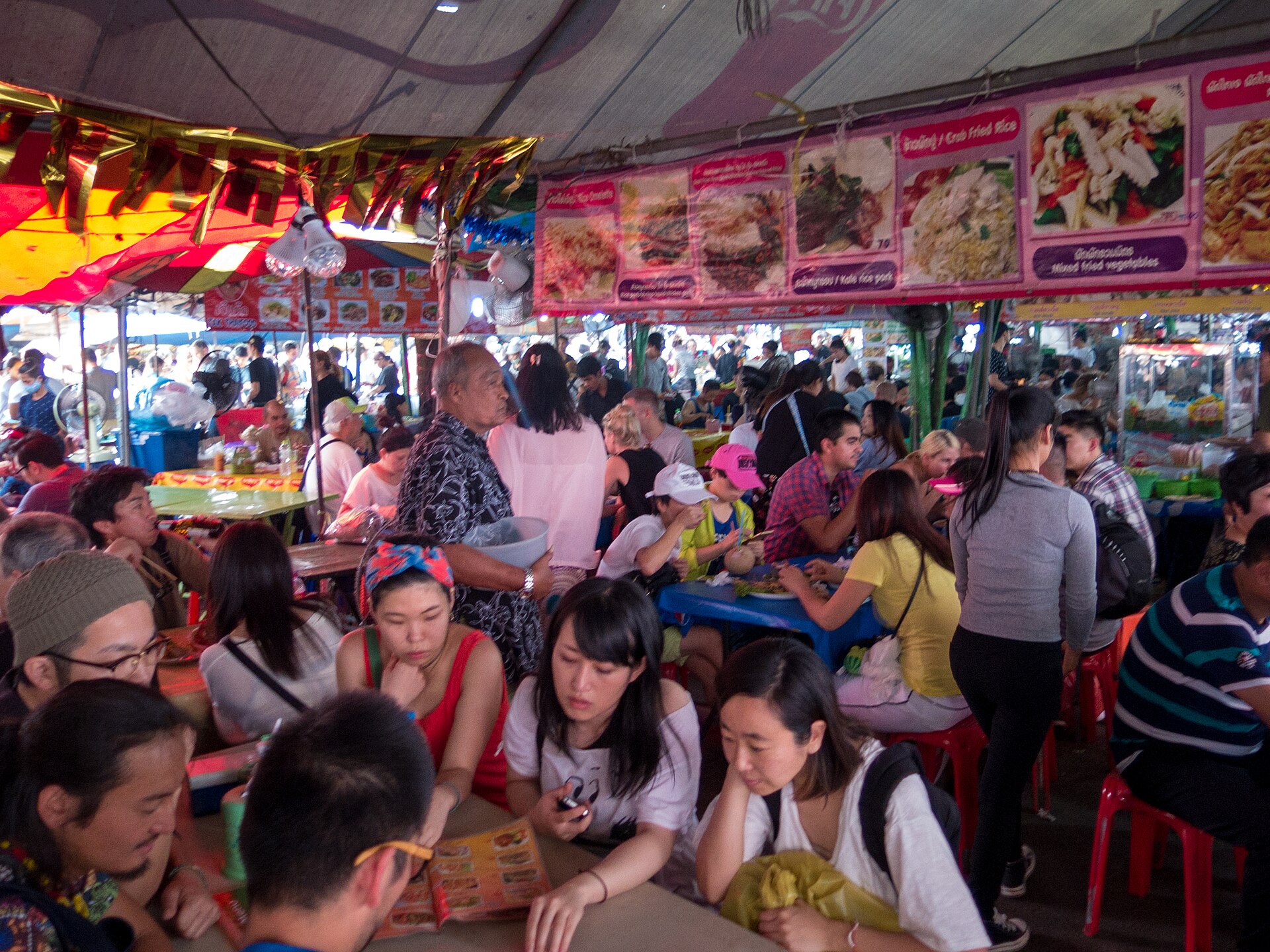
Thailand is easy to turn into a list of famous dishes, but the better habit is simpler: eat where the day already is. Morning markets, noodle shops, fruit stalls, rice and curry places, night markets and small food courts often teach you more than a planned food crawl.
A cooking class can be worth building into Chiang Mai, Bangkok or an island stop, especially early in the trip. It changes how you read menus for the rest of the country. Just do not let classes and food tours replace normal eating. Some of the best food days are the ones where you sit down because a place is busy and you are hungry.
Scams, pressure and small frictions
Thailand is generally easy to travel, but easy does not mean friction-free. Common annoyances include tuk-tuk detours, gem or tailor pressure, closed-temple stories, unclear taxi prices, overconfident tour sellers, damaged-scooter disputes and beach-party decisions that look worse in daylight.
The useful rule is boring: slow the decision down. Ask the price first. Walk away from urgency. Take photos of rented scooters. Keep your passport out of casual deposit situations when you can. Do not let a stranger's timetable become your plan.
What I would slow down
- Bangkok: not only as a landing pad, but as a place for food, river boats, markets, errands and getting used to the heat.
- Chiang Mai: because it works better when you have mornings, cooking, wandering and quiet afternoons rather than one packed temple day.
- One island area: enough time to stop comparing beaches and actually rest.
- Transfer days: ferries, minivans and flights need slack, especially in bad weather or high season.
What I would not overplan
I would book the first nights, understand the broad route and check current entry rules on an official source before committing to onward flights. I would not book every island room, transfer and tour before landing unless traveling in a tight high-season window. Thailand rewards a frame, not a locked script.
Source and experience note
This hub is a practical starting point. Prices, ferries, visa details and guesthouse situations still need a fresh check close to departure because Thailand changes by season, region and travel style.
Next useful pages
- Bangkok as a first landing base, a practical first-city guide for the first two nights, arrival rhythm and when not to rush onward.
- Chiang Mai as a northern Thailand base, for deciding how much room the north deserves.
- Pai only when northern Thailand has enough slack, for deciding whether the northern detour deserves extra nights after Chiang Mai.
- Krabi and Ao Nang as an Andaman coast base, for beach access without turning the coast into a ferry project.
- Thailand islands by coast, season and travel pace, for choosing one coast or island area with enough room for boats, weather and recovery.
- Where to go in Thailand, a practical comparison of Bangkok, the north, islands and slower stops.
- Thailand transport basics, for choosing trains, buses, ferries and flights without pretending transfer days are free.
- Thailand entry and arrival notes, maintained separately because rules and airport routines change.
- Thailand route ideas for 2, 3 and 4 weeks.
- Thailand food and cooking class notes for first-time travelers.